


Mehrdad Ceram Isatis Tile and Ceramic Factory
Modernization of the air pollutant control system and optimization of particle recovery in the plant's crushing line.
The crushing operation at the Mehrdad Ceram Isatis tile and ceramic plant—a major source of dust generation—faces critical challenges regarding non-compliance with Department of Environment standards and the waste of valuable raw materials. Beyond causing environmental issues and air pollution, the emission of suspended particles infiltrates sensitive equipment (such as sensors, electric motors, and rotating components), thereby imposing substantial hidden maintenance costs on the production chain.
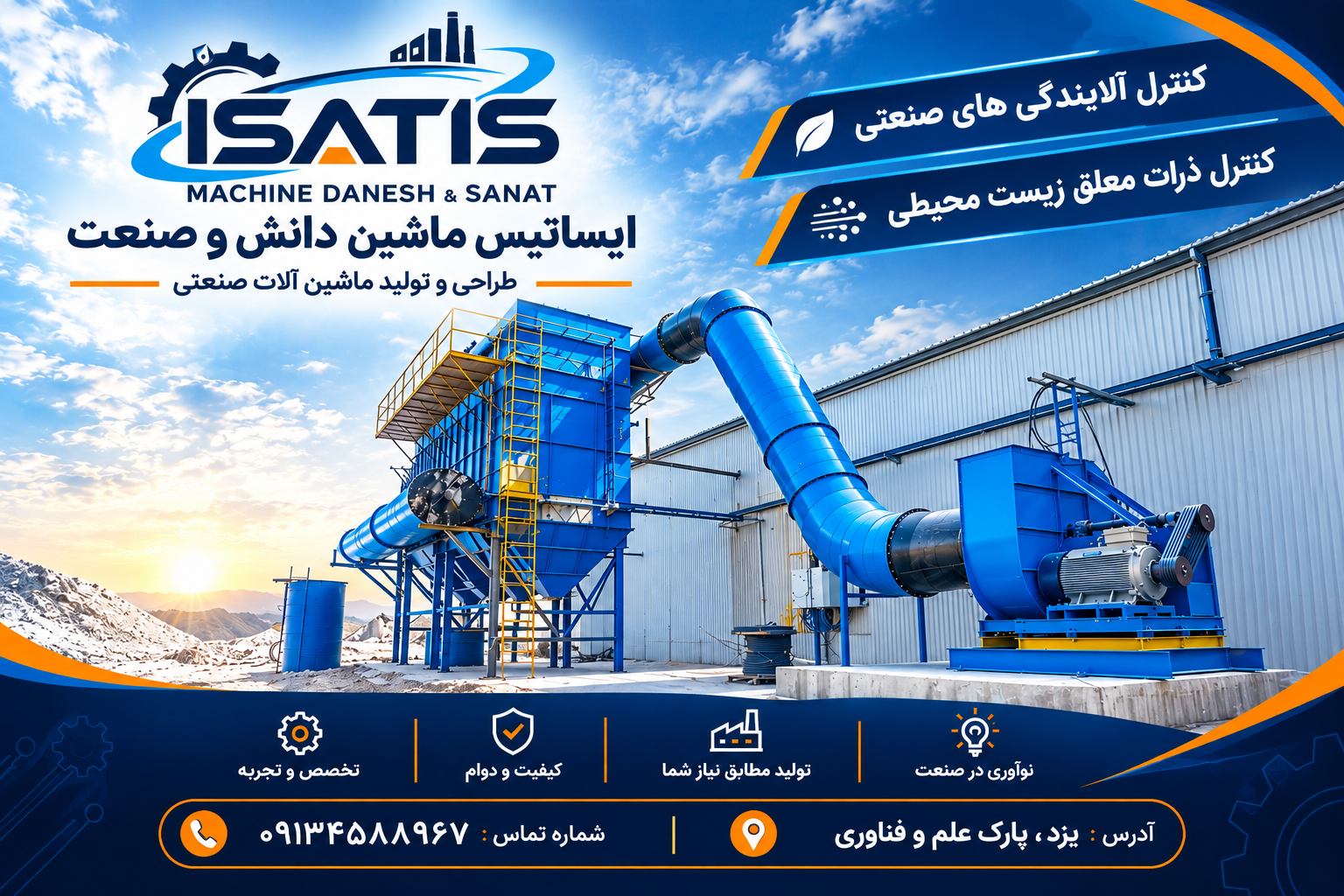
The proposed solution is to replace the current inefficient systems with a next-generation pulse-jet bag filter. The outstanding features that make this system the superior choice include:
Exceptional dust collection efficiency: capturing over 99.9% of particles smaller than 2 microns, ensuring an output cleaner than current stringent standards.
Continuous operation (Online Cleaning): Utilizing a pulse-jet cleaning system that clears dust from the bags without interrupting airflow, thereby maintaining the system's pressure drop at an optimal level (ensuring stable suction airflow).
Smart Management: Equipped with a PLC control system to adjust dust-cleaning cycles based on differential pressure, resulting in a 30% reduction in compressed air consumption.
Environmental: Complete elimination of pollutant emissions and receipt of the "Green Industry" certification from the Department of Environment, resulting in the elimination of environmental fines and levies..
Production Efficiency: Daily recycling of 5 tons of collected dust—containing minerals with excellent firing properties—into the body preparation silos at the Mehrdad Ceram Isatis plant, directly reducing raw material procurement costs.
Health, Safety, and Environment (HSE): Improving breathable air quality within the factory environment, thereby eliminating the risk of labor-related lawsuits and occupational illnesses.
This project has been defined as an investment, not an operating expense.
Reduction of direct costs: Lowering the cost of purchasing raw materials in proportion to the volume of collected dust.
Reduction of indirect costs: Extending the service life of crushing equipment by up to 35% by eliminating the abrasive effect of suspended particles.
Return on Investment (ROI): Based on precise calculations—and factoring in the elimination of pollution penalties and the recovery of materials (exceeding 1,800 tons annually)—the initial investment cost will be recouped through savings within a one-year period.
Implementing this project transforms the Mehrdad Ceram Isatis plant from a facility posing environmental risks into a modern, clean, and efficient operation. Investing in this system is not merely a matter of social responsibility but an economic necessity for maintaining production continuity in a competitive market. Backed by comprehensive technical and legal justifications, the project is fully prepared to secure financing from the National Environment Fund.