



Introduction to Industrial Bag Filters (Industrial Dust Collectors) – 7 Key Points About Industrial Bag Filters
بگ فیلتر صنهتی یکی از تجهیزات مهم در سیستم های غبارگیر و کنترل آلایندگی است که برای جمع آ"وری گردوغبار و ذرات معلق از جریان هوا استفاده میشود. این سیستم با عبور هوای آلوده ار کیسه های فیلتر، ذرات را جدا کرده و هوای پاک تر را به محیط یا میسر خروجی هدایت میکند.
Industrial bag filter (Bag Filter) One of the most widely used equipment in systems Industrial Dust Collector ...and is an air pollution control system used to separate solid particles and dust from industrial air and gas streams. By passing contaminated air through filter bags, the system traps suspended particles on the bag surfaces and directs the purified air into the environment or an exhaust outlet.
In many factories, processes such as crushing, milling, material transfer, raw material unloading, mixing, packaging, cutting, grinding, and material handling generate large volumes of airborne particles and industrial dust. If these particles are not collected, they can—in addition to polluting the workplace—compromise product quality, foul equipment, accelerate machinery wear and tear, and cause environmental issues.
In such circumstances, the industrial bag filter comes into play as a key component of the industrial dust collection and control system.
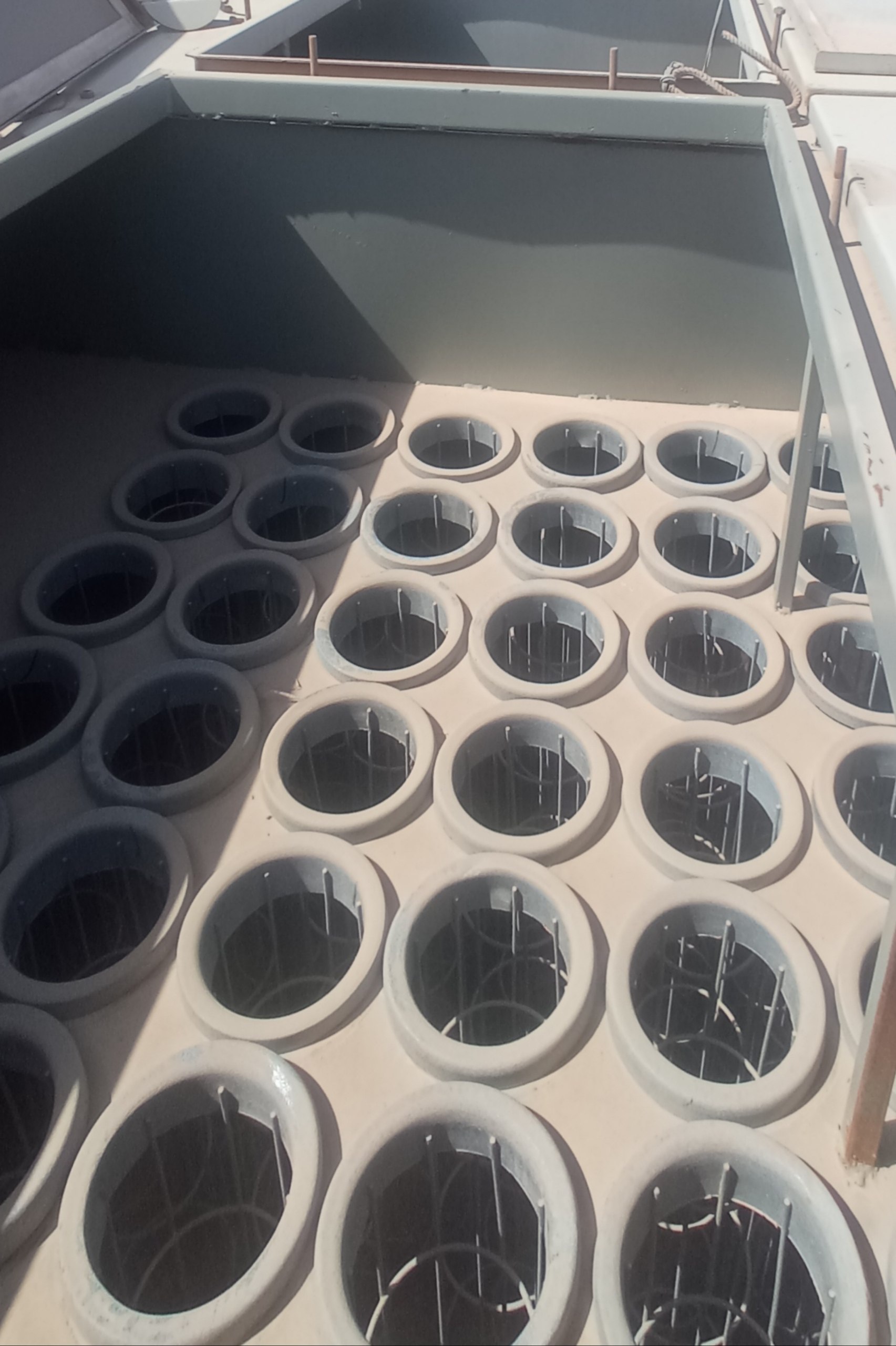
How an Industrial Bag Filter Works
The operation of a bag filter system is usually achieved by creating suction by Suction fan ...industrial process begins. A fan directs dust-laden air from the pollution sources toward the dust collection system. This air enters the baghouse chamber through the industrial suction ductwork. Inside the chamber, the airflow encounters the filter bags, and dust particles accumulate on either the outer or inner surfaces of the bags, depending on the filter design. Over time, a layer of dust forms on the bags; if this layer becomes excessively thick, airflow resistance increases and system performance declines. For this reason, the baghouse is equipped with a bag cleaning system.
Pulse-jet cleaning is one of the most common cleaning methods for industrial bag filters. In this process, compressed air is injected into the bags in short pulses at an appropriate pressure. This impact dislodges dust from the bag surface, causing the detached particles to fall to the bottom of the unit. The collected dust can then be discharged via a rotary valve, screw conveyor, or other material handling equipment, or—if suitable—reintroduced into the production cycle.To learn more about the performance of fabric filters and baghouse systems in controlling particulate matter, you can consult the U.S. EPA guide..
Main components of the bag filter system
A complete bag filter system consists of more than just filter bags; it comprises a collection of mechanical and control equipment that work together to collect and filter dust. The most important components of this system are:
1. Baghouse Body and Compartments: The main body of the unit houses the filter bags and internal components. Its design—including dimensions, plate thickness, number of compartments, and airflow configuration—must be tailored to the system's capacity, the type of pollutants, and the plant's operating conditions.
2. Filter bags: The bags are the most critical component of the filtration system. The filter material must be selected based on the type of dust, gas temperature, humidity, chemical properties of the pollutants, and process conditions.
Depending on the industrial application, various materials such as polyester, polypropylene, Nomex, PTFE, and other filter fabrics can be used.
3. Cage: In many pulse-jet bag filters, the filter bag is placed over a metal cage. The cage maintains the bag's shape during operation and cleaning..
4. Pulse-jet system: Consists of a compressed air tank, pulse valves, blow pipes, and nozzles; it is responsible for the periodic cleaning of the bags.
5. Dust discharge system: Particles separated from the bags collect at the bottom of the unit and must be discharged in a controlled manner. The choice of discharge equipment depends on the material type and the system capacity.
6. Industrial Suction Fan: This fan generates the pressure differential and airflow required by the system. Selecting the correct fan—based on airflow rate, static pressure, system pressure drop, duct length, and bag filter specifications—is of critical importance.
7. Ducting and local extraction system: Pipes and ducts transport contaminated air from various points in the plant to the bag filter. Poor ducting design can compromise the performance of the entire system, even if the bag filter itself is properly designed.
8. Control and Monitoring System: In advanced systems, pressure, pulse duration, fan status, filter pressure drop, and other operational parameters are monitored to ensure stable system performance.
The Importance of Selecting the Right Filter Bag
Selecting the appropriate bag is one of the most important steps in designing an industrial dust collector; a single type of bag cannot be used for all factories./p>
To select the appropriate filter, factors such as the following must be considered:
Type of dust
Particle size
Gas temperature
Humidity level
Corrosiveness of materials
Dust adhesion
Volume of air passing through
Dust concentration
Environmental conditions
Type of industrial process
Bag cleaning method
For example, in environments with high gas temperatures, using a standard filter may reduce the bag's service life and impair system performance. Conversely, in processes involving moisture or sticky substances, selecting an unsuitable filter material can lead to rapid clogging of the bags.
Bag Filter in Industrial Suction Systems
One of the key applications of a bag filter is its use in conjunction with an industrial suction system. In a standard system, dust-generating points are enclosed by hoods, local exhaust intakes, or appropriate collection equipment; an exhaust fan then directs the airflow through a ductwork network toward the bag filter.
Therefore, the overall performance of the system can be considered as follows:
Dust generation point → Local extraction → Ducting → Bag filter → Extraction fan → Purified air
In this configuration, coordination among the various components is crucial. If the fan capacity falls short of system requirements, insufficient suction is generated at the pollutant source points. Improper duct design leads to increased pressure drop. Furthermore, if the bag filter's filtration area is not matched to the airflow rate, pressure drop rises and the service life of the bags is reduced.
The Role of Bag Filters in Emission Control
One of the primary objectives of using bag filters is pollution control and the reduction of industrial particulate matter emissions. Dust generated by industrial processes can contain extremely fine particles that, if released into the environment, compromise air quality within the plant and the surrounding area. By separating these particles from the airflow, bag filter systems enable more effective pollution control. For this reason, in many industries—including...
Tile and Ceramic Industries
Cement
Gypsum
Steel and Casting
Mineral Industries
Food Industry
Chemical Industries
Wood Industries
Construction material manufacturing plants
Mills and crushing lines
Materials Processing Industries
Bag filters and related equipment are used.
Advantages of Using Industrial Bag Filters
Using a bag filter designed to suit the process conditions can offer numerous benefits:
Reduction of dust emissions:
Suspended particles in the airflow are collected, preventing their direct release.
Improving workplace air quality:
Collecting dust at the source of generation reduces the level of air pollution in the workplace.
Equipment Protection:
Reducing dust accumulation on machinery and equipment can help decrease contamination and wear and tear.
Increasing process productivity:
In some industries, the collected dust contains reusable materials and can be returned to the production cycle after the process conditions have been evaluated.
Reduction of material waste:
Instead of raw materials escaping as dust, it becomes possible to collect and manage them.
Better control of the factory's environmental conditions:
Utilizing a designed and engineered system transforms pollution control from a localized, unsystematic activity into a manageable process.The design of the bag filter must be engineered.
An important point is that a bag filter alone is not a complete dust collection solution; the system's actual performance depends on the design of the entire assembly.
Factors such as required airflow, particle transport velocity in the duct, pressure drop, fan type, filtration level, bag material, air inlet configuration, dust discharge method, and the cleaning system must be evaluated in conjunction with one another.
For this reason, the design of an industrial dust collection system must be based on the plant's actual conditions and the specific type of process; simply selecting a unit with a specific nominal capacity is insufficient.
Conclusion:
The bag filter is a critical component in industrial dust and pollution control systems. By utilizing filter bags, the unit separates suspended particles from the contaminated airflow and allows the purified air to be directed to the exhaust outlet. A properly integrated system—combining the bag filter, suction fan, industrial extraction system, ductwork, dust discharge equipment, and control system—can provide a comprehensive solution for dust collection and the reduction of pollutants generated by industrial processes.